The average travel website converts somewhere between 0.2% and 4% of its visitors into enquiries or bookings. For most operators, that number sits closer to the lower end. Meanwhile, the cost of acquiring that traffic - through paid search, metasearch, social and SEO - continues to rise.
The result is a familiar tension: marketing teams are under pressure to grow revenue, but the instinct is to spend more on acquisition rather than interrogate what's happening to the visitors already arriving.
Contentsquare's 2026 Digital Experience Benchmarks report puts this in sharp context. Overall conversion across travel and hospitality declined 6.8% year on year, while travel agencies and services saw an 18.5% increase. The gap between operators who are actively managing conversion and those who are not is widening.
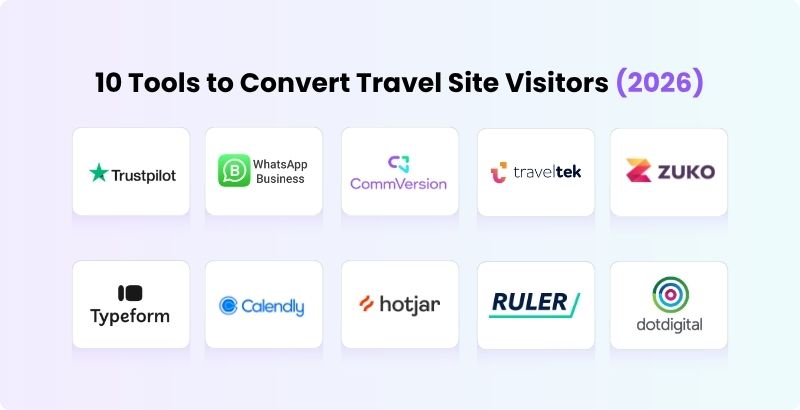
This blog looks at ten tools that directly address that gap - not just how they measure the problem, but how they close it. What they do, where they fit in the marketing stack, and what to consider before adopting them.
1. CommVersion SmartChat
Turning high-intent visitors into qualified leads, before they leave
97% of travel website visitors leave without making contact. Not all of them need to be reached, but a meaningful proportion are in-market, actively researching, and will move on to a competitor within the same browsing session if nothing intervenes. For most operators, that is the single largest source of lost pipeline on the site, and it is currently invisible in most analytics dashboards.
SmartChat is a live chat system engineered for conversion, not support. It combines SmartTargeting, predictive AI and behavioural signals, with human-led chat, to identify and engage the visitors most likely to convert, at the moment they are about to leave.
How it works
SmartTargeting monitors behavioural disengagement signals across destination and itinerary pages: time on page, scroll depth, cursor movement toward the tab or back button. When a high-value visitor shows signs of leaving without enquiring, SmartChat initiates a conversation. A trained human agent, supported by AI Assist, handles it from there.
AI Assist is the intelligence layer running behind every conversation. It gives agents instant retrieval from a knowledge base built on the operator's own site content and product detail, relevance-scored suggestions drawn from what has converted before, and SmartSummaries that hand a fully qualified lead to sales with context attached. Agents choose, edit and personalise every answer, so accuracy and brand tone stay intact.
Why human-led matters
AI-only chat is now common on travel sites, and it converts poorly on high-consideration enquiries. A visitor asking about a bespoke itinerary, a group booking or a complex date change is not looking for a scripted answer. Human agents, backed by AI Assist rather than replaced by it, convert at up to 5 times the rate of bots on this type of enquiry.
Addressing the cannibalisation question
The leads SmartChat generates are incremental. It does not replace, intercept or cannibalise existing form, phone or inbound channels; testing consistently shows normal enquiry volume holds steady or increases alongside the chat leads, rather than being displaced by them.
What it delivers
Every qualified lead is passed to the sales team in real time, through InstantConnect or Appointment Booking, with full attribution data attached, so the enquiry never sits in a queue overnight. CRM and GA4 integrations mean nothing falls into a reporting black hole, and the CommVersion dashboard gives full visibility of lead quality, agent impact and conversion trends. Across CommVersion's travel client base, the typical impact is a 10-30% increase in overall enquiry rate, generated from existing traffic, without additional spend or headcount.
Pricing is proof-first: pay per qualified lead, with no setup fees, and a risk-free trial available for qualified businesses.
Best for: High-intent visitor capture, out-of-hours enquiry generation, lead qualification for high-consideration bookings. Fully managed service.
2. Hotjar
Connecting visitor behaviour to the enquiry funnel

Numbers tell you where visitors are dropping off. Hotjar tells you why. It records sessions, generates heatmaps, and, critically for travel, allows teams to deploy exit-intent surveys that trigger when a visitor moves to close a tab.
In a high-consideration category where a visitor might be weeks into research before making contact, understanding why someone left without enquiring is as commercially valuable as knowing that they did. A visitor who abandons a destination page after scrolling 80% of the way down is a different problem from one who bounces in three seconds. Hotjar makes that distinction visible, and the patterns it surfaces are useful groundwork for deciding where a tool like SmartChat should be targeting engagement.
Best for: Heatmaps, exit surveys, session recording, form analytics. Paid, with a limited free tier.
3. WhatsApp Business Platform
Meeting travellers on the channel they already use

WhatsApp, WhatsApp Business, and WhatsApp Business Platform compared.
A growing share of travel enquiries, particularly from younger and international audiences, now happen over WhatsApp rather than email or a web form. For operators still routing every enquiry through a contact form, that is a channel gap, not a minor inconvenience.
The WhatsApp Business Platform allows operators to receive, qualify and respond to enquiries on a channel travellers already trust and use daily. As a messaging channel, it works best as an extension of an existing conversion setup rather than a replacement for it, giving operators a consistent way to qualify and route leads regardless of where the conversation starts.
Best for: Reaching younger and international travel audiences, extending enquiry capture beyond web forms and email. Free to use, with message-based pricing through providers.
4. Traveltek (iSell)
The booking and CRM layer behind the enquiry

Traveltek's iSell platform: dynamic packaging, booking and CRM in one system.
Once a visitor has enquired, the operational question becomes: how quickly and accurately can that enquiry be turned into a quote, and the quote into a booking? Traveltek's iSell platform handles dynamic packaging, booking and CRM for UK travel agents and operators, connecting supplier content to the sales process.
For operators who have solved the enquiry-capture problem but are losing time or accuracy in the quoting and booking stage, a dedicated travel CRM closes that gap. It is worth having in place before scaling up lead volume from other channels, since a faster enquiry-to-quote turnaround compounds the value of every additional lead generated upstream.
Best for: UK travel agents and tour operators managing dynamic packaging, quoting and booking in one system. Paid, UK-focused.
5. Zuko Analytics
Finding where enquiries die in your forms

Most travel operators know their enquiry form is a drop-off point. Few know exactly where within the form visitors are abandoning: which field is causing friction, whether it is a validation error, a field label that creates hesitation, or a form that simply asks for too much too soon.
Zuko answers that question with granular form field analytics. It tracks time spent on each field, abandonment rates at every step, and the specific points at which visitors give up. For travel operators with multi-step enquiry forms, common in tailor-made, cruise and group travel, this level of visibility can surface improvements that have a direct and measurable impact on enquiry volume without changing anything above the form.
Best for: Enquiry form abandonment analysis, multi-step form optimisation. Paid, UK-founded.
6. Typeform
Replacing static enquiry forms with a higher-engagement alternative
Typeform vs Jotform: templates, question types, and use cases compared.
The standard travel enquiry form - a grid of fields on a white background, submitted with a single button - was not designed with conversion in mind. It was designed for data collection. The two are not the same thing.
Typeform replaces static forms with a conversational, one-question-at-a-time format that reduces cognitive load and increases completion rates. For travel operators handling complex, multi-variable enquiries - destination, travel dates, group size, budget, trip type - a conversational form that guides the visitor through the process performs meaningfully better than a traditional multi-field layout, and integrates with most CRM and marketing automation tools so qualified submissions flow straight into existing sales workflows.
Best for: Multi-step enquiry capture, replacing static forms, improving form completion rates. Paid, with a free tier.
7. Calendly
Turning a qualified enquiry into a booked call, immediately
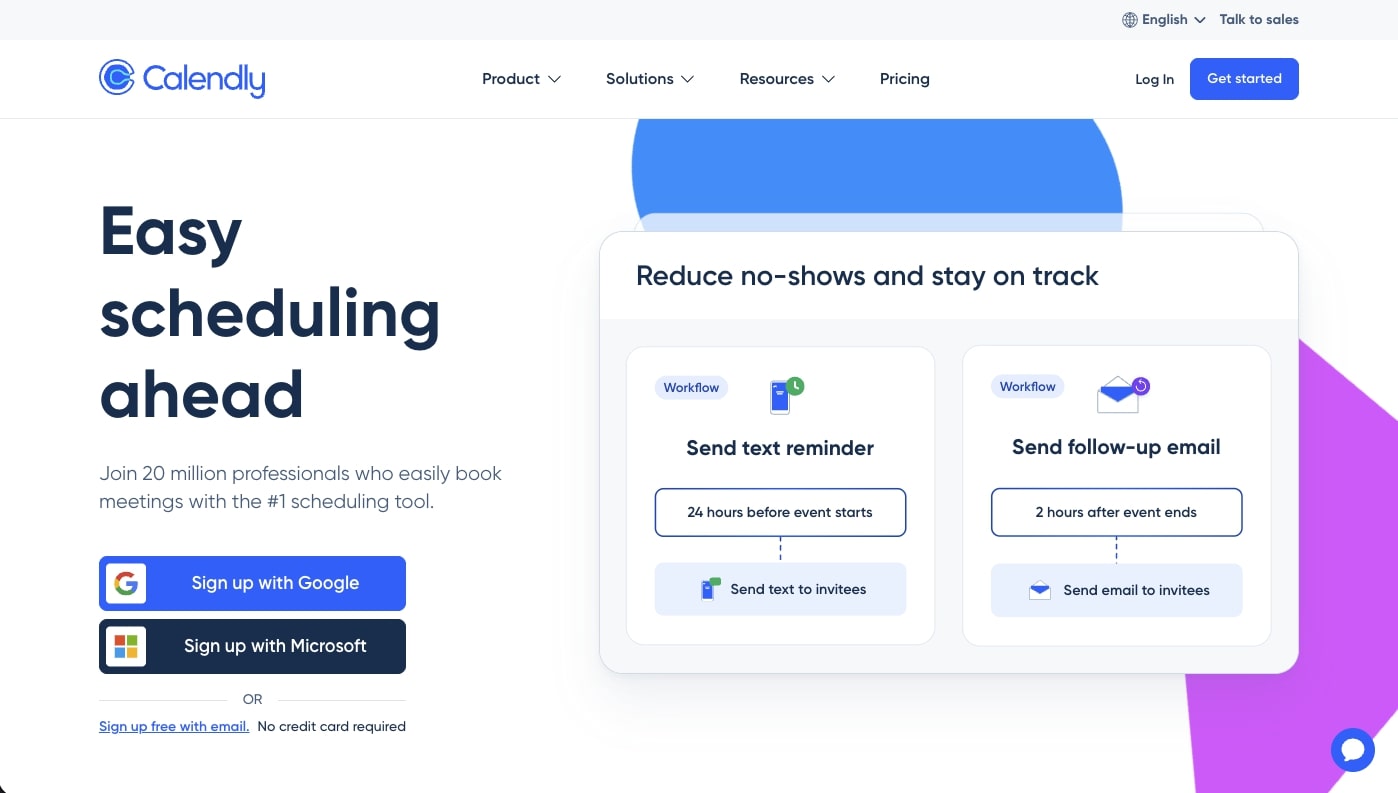
Calendly's self-serve booking interface for scheduling calls directly into a sales calendar.
A qualified lead that sits in an inbox overnight loses momentum. For enquiries that need a human conversation before booking, such as tailor-made itineraries or group travel, the fastest route to a sale is often a scheduled call, not another email exchange.
Calendly gives visitors and qualified leads a self-serve way to book time directly into a sales team's calendar, removing the back-and-forth of finding a slot. Used alongside a chat-to-booking handoff, it shortens the distance between an enquiry being qualified and a conversation actually taking place.
Best for: Converting a qualified enquiry directly into a booked call. Free tier available, paid plans for teams.
8. Ruler Analytics
Closing the loop between marketing spend and actual bookings
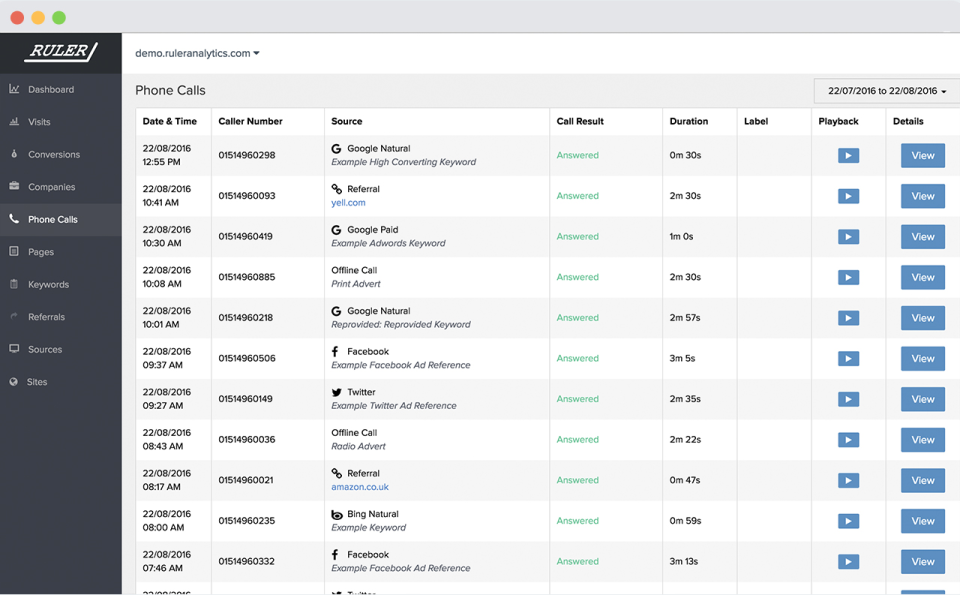
Ruler Analytics: connecting marketing activity to revenue outcomes, not just lead volume.
Most conversion tools tell you what happened on the website. Ruler Analytics tells you what happened after: which leads became customers, which channels produced the highest-quality pipeline, and where marketing spend is generating the best return on actual revenue, rather than just lead volume.
For travel operators, where the gap between an online enquiry and a confirmed booking involves multiple touchpoints and a sales conversation, this distinction is significant. A channel that drives high enquiry volume at low cost may produce lower-quality leads that the sales team cannot convert. Ruler connects marketing activity to offline revenue outcomes, making that dynamic visible, and allows marketing and sales to align on channel strategy based on commercial outcomes rather than surface metrics.
Best for: Closed-loop revenue attribution, marketing and sales alignment, UK travel operators. Paid.
9. Dotdigital
Nurturing the enquiries that aren't ready to book yet
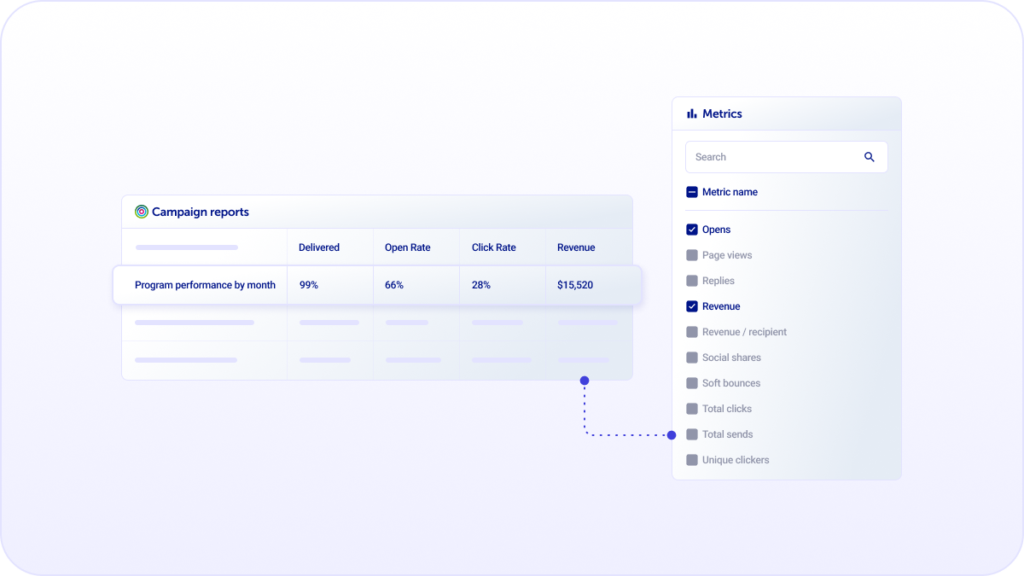
Dotdigital's customer profile view: segmented, behaviour-triggered nurture in one place.
Not every qualified lead is ready to book on first contact. Some need a follow-up itinerary, a reminder before a deposit deadline, or a nudge when a fare drops. Without a structured nurture programme, those leads go cold.
Dotdigital is a UK-strong marketing automation platform for email and cross-channel messaging, built for the kind of segmented, behaviour-triggered nurture sequences that suit a long travel booking cycle. Paired with a lead source like SmartChat that is already qualifying visitors by intent, it gives marketing teams a way to keep warm leads warm until they are ready to convert.
Best for: Post-enquiry nurture sequences, segmented email and cross-channel messaging. Paid, UK-focused.
10. Trustpilot
Building the trust a booking decision requires

Trustpilot reviews surfaced on-site at the point a visitor is deciding whether to enquire.
Travel is a high-consideration, often high-value purchase, frequently made months ahead of departure and paid for before the product is experienced. Visitors weighing that decision look for evidence that other people have had a good outcome, and a page with no visible trust signal reads as a gap, not a neutral absence.
Trustpilot collects verified customer reviews and surfaces them as on-site widgets, giving visitors social proof at the exact point they are deciding whether to enquire. For operators already generating strong outcomes through channels like SmartChat, a visible review layer reinforces the message that those outcomes are real and repeatable, rather than a one-off claim.
Best for: On-site trust signals, review collection, reducing hesitation at the point of enquiry. Paid, with a free listing tier.
The 10 Tools at a Glance
The tools covered in this piece span five distinct jobs: understanding visitor behaviour, testing improvements, personalising the experience, capturing leads at the right moment, and measuring what is actually driving revenue. No single tool does all of this well. The strongest conversion programmes in travel tend to combine three to five of these, chosen based on where the biggest drop-off is occurring and what the team has the capacity to act on.
| Tool | Category | Primary Use | Best For |
|---|---|---|---|
| CommVersion SmartChat | Managed live chat | High-intent visitor capture and lead qualification | Converting in-market visitors before they move to a competitor |
| Hotjar | Behaviour analytics | Heatmaps and exit surveys | Understanding why visitors leave without enquiring |
| WhatsApp Business Platform | Messaging channel | Enquiry capture beyond web and email | Reaching younger and international travel audiences |
| Traveltek (iSell) | Travel booking and CRM | Quoting, packaging and booking | UK operators turning enquiries into bookings faster |
| Zuko Analytics | Form analytics | Enquiry form abandonment tracking | Identifying exactly where visitors drop out of contact forms |
| Typeform | Conversational forms | Multi-step enquiry capture | Replacing static forms with a higher-engagement alternative |
| Calendly | Booking and scheduling | Chat-to-call handoff | Converting a qualified enquiry into a booked call |
| Ruler Analytics | Marketing attribution | Closed-loop revenue attribution | Connecting marketing spend to actual bookings, not just enquiries |
| Dotdigital | Marketing automation | Post-enquiry nurture | Keeping warm leads warm until they are ready to convert |
| Trustpilot | Reviews and trust | On-site trust signals | Reducing hesitation at the point of enquiry |
Where to start
The temptation with any tools list is to overhaul the stack. In practice, the operators seeing the most consistent improvement start with one problem, usually the gap between traffic volume and enquiry rate, and work backwards to the tool that addresses it most directly. For most travel operators, that gap is largest at the point a high-intent visitor is about to leave without making contact. The table above is a reference point, not a shopping list.
See what your website traffic is worth
Most travel websites have chat. Very few use it well enough to move the needle on bookings. CommVersion will show you the uplift on your own traffic before you commit to anything.
Book a Demo →.png)
.png)
.png)